
Emergency Response 24/7 in Windsor & Essex County

    (226) 773-9265
    Heywood Roofing
    Flat Roof Sections on Your Home
    Back to all articles
    Homeowner Guides

    Flat Roof Sections on Your Home: Repair Options Explained

    March 02, 2024
    Heywood Team

    Got a flat roof on your porch, garage, sunroom, or home addition? You're not alone. A lot of Windsor homes have at least one low-slope or flat roof section somewhere on the property.

    And here's the problem: those flat sections don't shed water the same way a steep shingle roof does.

    After a heavy rain, snow melt, or freeze-thaw cycle, water can sit there longer than it should. Over time, seams open up, flashing pulls away, and small cracks turn into leaks. Next thing you know, you've got water stains on the ceiling, soft wood underneath, or a drip showing up where you least expect it.
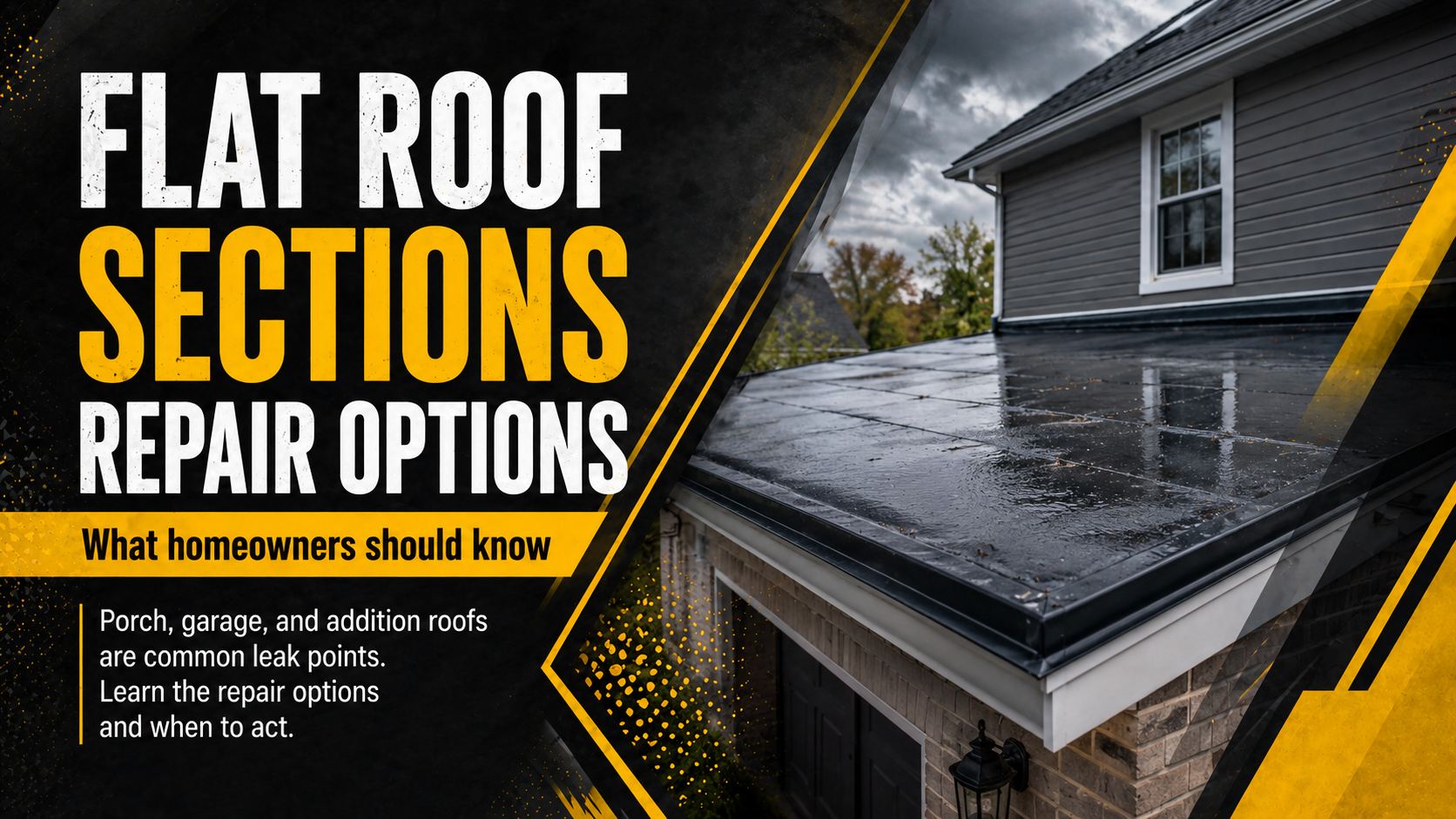
    Flat roof sections can be repaired, but the right option depends on the roof's condition, age, drainage, and how much damage is hiding underneath.

    Flat roof section on a home

    Why Flat Roof Sections Leak

    Flat roofs aren't usually completely flat. They should have a slight slope to move water toward a drain, gutter, or edge. But if the slope is too low, the roof settles over time, or the drainage gets blocked, water starts to pond.

    That sitting water is one of the biggest problems.

    Unlike shingles, flat roofing depends heavily on sealed seams, proper flashing, and a watertight membrane. Once any of those areas fail, water can sneak in quietly and travel before you ever see it inside the house.

    Common leak points include:

    • Seams in the roofing membrane: Over time, heat, cold, and movement can cause seams to separate.
    • Flashing around walls and edges: Where the flat roof meets siding, brick, or a taller wall is a major weak spot.
    • Old caulking or sealant: Caulking breaks down, cracks, and pulls away.
    • Ponding water: Water that sits for too long speeds up wear and finds weak spots.
    • Poor previous repairs: Tar patches and quick fixes can hide the real issue for a while, but they usually don't solve it permanently.

    The Most Common Flat Roof Areas on Homes

    On residential homes in Windsor and surrounding areas, we usually see flat roof issues on:

    • Porch roofs
    • Garage roofs
    • Sunroom roofs
    • Rear additions
    • Dormers
    • Bay window roof sections
    • Small walkout or overhang areas

    These areas are often added after the original home was built, which means the transition points between the old structure and the new roof are very important. If that tie-in wasn't done right, leaks are almost guaranteed eventually.

    Signs Your Flat Roof Section Needs Attention

    Don't wait until water is pouring into the house. Flat roof problems usually give you warning signs first.

    Look for:

    • Water stains on the ceiling
    • Bubbling paint or drywall
    • Soft spots on the roof deck
    • Ponding water after rain
    • Cracked or peeling roof material
    • Loose flashing
    • Splits around seams
    • Moldy or musty smells inside
    • Water dripping near exterior walls
    • Sagging or low spots in the roof surface

    If you see any of these signs, it's time to have the roof checked. A small repair today can save you from replacing decking, insulation, drywall, and trim later.

    Repair Option 1: Seal Small Cracks and Open Seams

    If the roof is still in decent shape and the leak is coming from a small seam, crack, or flashing point, a targeted repair may be enough.

    This usually involves cleaning the area properly, removing loose material, applying the right roofing sealant or membrane patch, and making sure the repair bonds properly.

    This is best for newer flat roof sections or roofs with one isolated problem area.

    Contractor insight: A proper repair is not just smearing tar over the leak. The area needs to be cleaned, prepped, and sealed with the right material for that roof system.

    Repair Option 2: Flashing Repair

    Flashing is one of the most important parts of any flat roof section.

    If your flat roof ties into a wall, chimney, siding, brick, or another roofline, that transition needs to be sealed correctly. When flashing fails, water can run behind the roof surface and leak inside.

    Flashing repairs may include:

    • Resealing the wall connection
    • Replacing damaged metal flashing
    • Installing proper termination bars
    • Fixing counter flashing
    • Sealing around edges and corners
    • Correcting poor tie-ins from old work

    If the main roof surface is still solid, fixing the flashing may solve the leak without replacing the whole roof.

    Repair Option 3: Patch Damaged Membrane Areas

    If the flat roofing membrane has a puncture, split, blister, or damaged section, it may be possible to patch the affected area.

    This is common when the roof has been damaged by foot traffic, fallen branches, ice, tools, animals, or old repairs.

    A membrane patch works best when the surrounding roof is still strong. If the whole surface is brittle, cracked, or holding water everywhere, patching becomes more of a temporary bandage than a real solution.

    Repair Option 4: Improve Drainage

    Sometimes the roof material isn't the only problem. The water simply has nowhere to go.

    Flat roof drainage issues can be caused by:

    • Clogged gutters
    • Low spots in the roof
    • Poor slope
    • Settled framing
    • Blocked scuppers or drains
    • Improper edge detail

    If water sits on the roof for days after a rain, the repair should address drainage too. Otherwise, you may fix one leak and end up with another one later.

    In some cases, improving drainage may involve adjusting the roof edge, clearing gutters, adding better water flow, or rebuilding the low area during a larger repair.

    Repair Option 5: Full Flat Roof Replacement

    Sometimes the honest answer is replacement.

    If the flat roof section is old, soft, poorly sloped, full of patches, or leaking in multiple areas, replacing it may be the smarter investment.

    A full replacement may include:

    • Removing the old flat roofing
    • Inspecting the wood deck underneath
    • Replacing rotten or soft sheathing
    • Installing proper underlayment or membrane
    • Correcting flashing details
    • Improving drainage where possible
    • Installing a new flat roofing system
    • Sealing all walls, edges, and transitions properly

    This gives you a clean start instead of chasing leaks every few months.

    Contractor Insight: Don't Ignore a Flat Roof Leak

    I'll give it to you straight. Flat roof leaks are sneaky.

    With a steep shingle roof, water usually shows up close to the problem area. With a flat roof, water can travel under the membrane, along the deck, behind flashing, and into the wall before it finally stains your ceiling.

    By the time you see the leak inside, the damage may have been building for a while.

    That's why quick action matters. A small open seam or cracked flashing detail can turn into rotten decking, damaged drywall, wet insulation, and a much bigger repair bill.

    Why Windsor Weather Is Hard on Flat Roofs

    Windsor weather is rough on flat roof sections.

    We get heavy rain, high winds, snow, ice, sudden thaws, and overnight freezes. That freeze-thaw cycle is especially hard on low-slope roofing.

    Water gets into a small opening, freezes, expands, and pushes the material apart. Then it thaws, gets deeper into the roof system, and repeats the process again.

    Over time, that movement breaks down seams, flashing, and old sealants.

    That's why flat roof sections should be inspected regularly, especially before winter and after major storms.

    Should You Repair or Replace?

    Here's a simple way to think about it.

    A repair may make sense if:

    • The roof is newer
    • The leak is isolated
    • The membrane is still flexible
    • The decking feels solid
    • There is no major ponding
    • The flashing issue is minor

    Replacement may be the better option if:

    • The roof is old
    • There are multiple leaks
    • Water is ponding badly
    • The surface is cracked or brittle
    • There are soft spots underneath
    • Previous patches keep failing
    • The roof was poorly installed

    The best answer comes from an inspection. You need to know what's happening above the roof surface and underneath it.

    When to Call a Roofing Contractor

    If you have a flat roof section on your porch, garage, or addition and you notice leaking, staining, ponding water, or damaged flashing, don't wait.

    Call a local roofing contractor before the problem spreads.

    At Heywood Roofing & Renovations, we inspect the roof, check the problem areas, explain what's going on, and give you honest repair options. Sometimes a targeted repair is enough. Sometimes replacement is the better long-term move.

    Either way, the goal is simple: stop the leak, protect your home, and fix it properly.


    Need Help With a Flat Roof Section?

    If your porch, garage, or addition roof is leaking, holding water, or showing signs of wear, we can help. Heywood Roofing & Renovations provides roof repairs, flat roof section repairs, inspections, and roof replacements throughout Windsor and surrounding areas.

    Don't wait until a small leak becomes a major interior repair.

    Book Your Roof Inspection Today

    Related Articles

    Roof Leak? What To Do Before It Gets Worse

    Roof Leak? What To Do Before It Gets Worse

    Discover a roof leak in your Windsor home? Follow these simple steps to minimize damage and get it fixed fast before it becomes a major problem.

    Read Article
    Repair vs. Replace: How to Know When Your Roof is Done

    Repair vs. Replace: How to Know When Your Roof is Done

    Missing shingles? Water stains on your ceiling? We break down the definitive signs that indicate whether you need a simple repair or a full roof replacement.

    Read Article
    Avatar
    Hi there! Have a question? Chat with us here.